

December 24th, 2014
2 min read
By
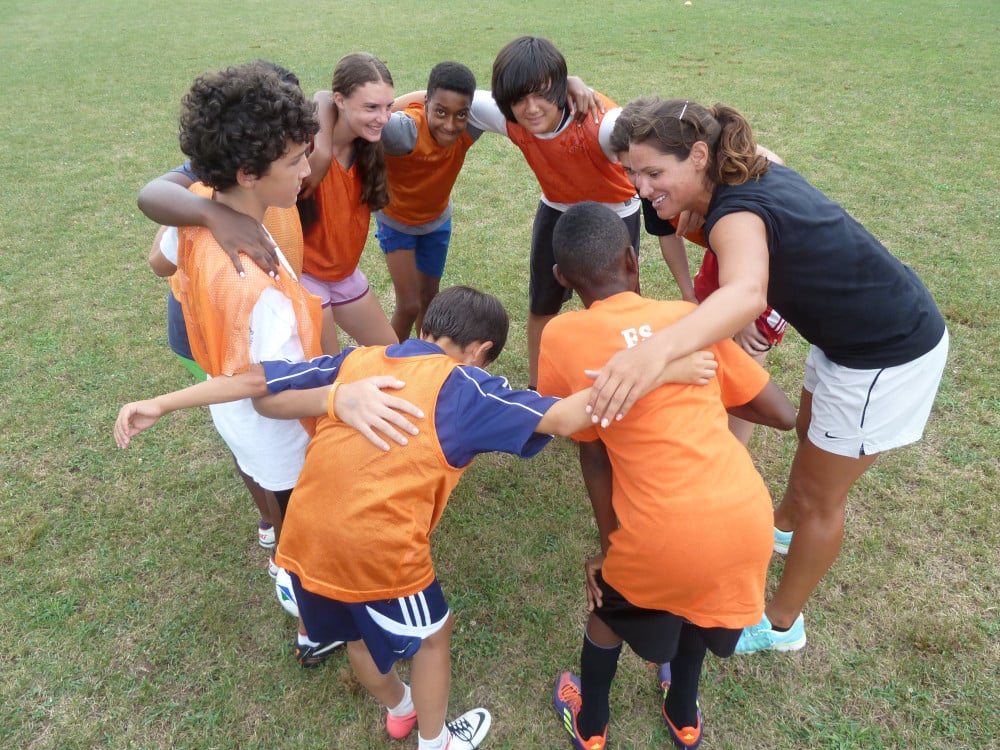
 Social and emotional development is an important benefit of playing on a team. Parents and coaches can instill positive social behaviors and help players work together towards a common goal.
You’ve already seen the physical gains that your child is making while playing sports, but what about other areas of development? Although athletics can certainly help boost motor abilities such as strength and coordination, playing a sport is also a great way to build social and emotional skills, according to the American Academy of Pediatrics.
We’ve all seen it—the “You let that goal get by and lost the game for us!” kid. The child may be the most skilled athlete on the field, but he still needs some work when it comes to controlling his emotions and social behaviors. Although kids love to be number one, it’s the team spirit that can help them become true winners. Being part of a team helps children learn to communicate with each other, share, and cooperate. They also build coping skills and learn how to overcome adversity. “Working well with others” is a critical skill to succeed in life. The truly successful people and athletes are the ones that make everyone around them better.
Does having a less-than-stellar attitude mean that a child is ‘bad’ or beyond help? Not at all. Extra guidance and practice are important not only for the kids who need to work on their sports skills but for those kids who are also in poor sports. Whether you’re helping your own child or the kids you coach, supporting sportsmanship means building social and emotional development too.
To develop the team spirit:
- Act as a role model. If you’re only playing the “star” athlete or are constantly criticizing the children, you’re teaching the wrong lesson. Make the game fair and fun. If you’re a parent, cheer everyone on (not just your own child). If you’re a coach, congratulate everyone on their effort. This also includes the opposing team.
- Focus on the effort and not the effect. Ask the children to do the same. Also, look for improvement in the children as a team as well as individuals.
- Be sure to make everyone understands the importance of their respective roles on the team. Equally important is that the kids are supporting their teammates on AND off the field. When professional and elite athletes are asked what they miss most after they retire, they often refer to the bonding and relationships with their teammates. They miss the camaraderie – help the kids establish this.
- Understand where the kids are developmentally and teach/coach accordingly. Kids develop at different rates as well as grow differently physically. When parenting or coaching, be sure the development has a long-term approach. It is not simply about the game this weekend but the player that he/she will become. For example, be sure to give the kids opportunities at different positions while they are young so they can learn and build their skill set. The tallest child in 3rd grade maybe average height and quicker in 7th grade – did they develop the skill set to play a variety of positions?
- Celebrate everyone’s victories, no matter how small they are. Did the players incorporate something that was worked on in practice? While it may not have worked perfectly, it shows progress; teach the rest of the kids to praise these seemingly simple milestones.
Although physical training is a must when it comes to youth sports, social and emotional practice is just as critical. Instead of dismissing a poor sport, turn the team’s behavior around with a few life lessons in working together and being supportive.
Topics:
